



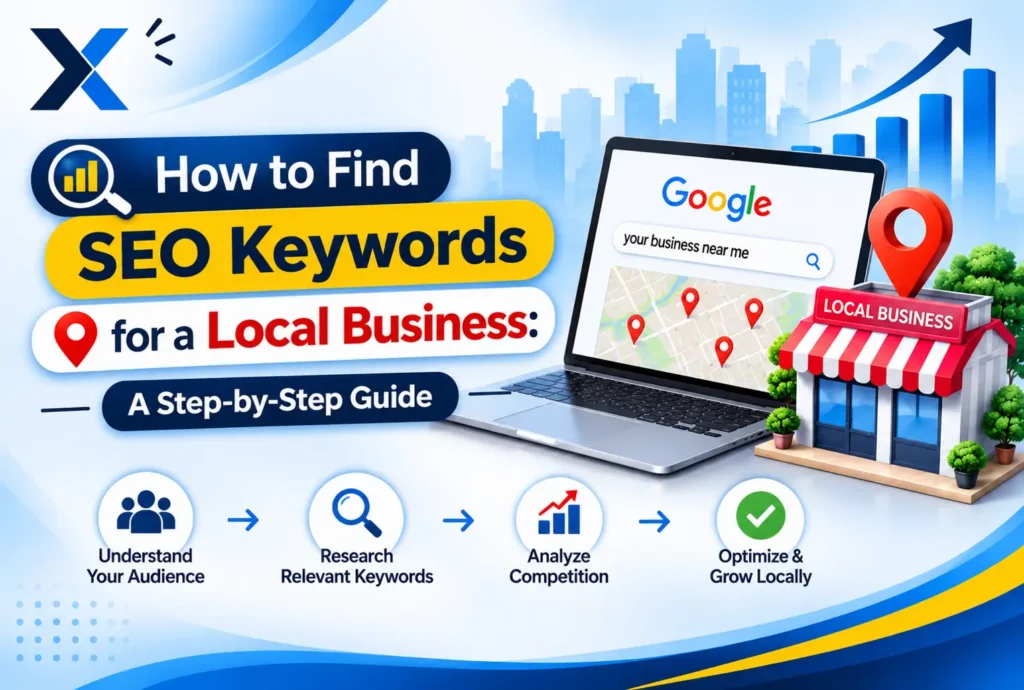
Finding the right SEO keywords is one of the most important steps in helping a local business attract customers through Google. Whether you run a restaurant, dental clinic, plumbing company, salon, law firm, or digital marketing agency, choosing relevant keywords can help your website reach people who are actively searching for your services.
However, ranking on Google is not just about choosing keywords with high search volume. You need to understand what your potential customers are searching for, which locations they want services in, and what type of information they expect to find.
In this guide, you will learn how to find SEO keywords for a local business, use free keyword research tools, analyze competitors, and turn keyword ideas into a practical local SEO strategy. How to Find SEO Keywords for a Local Business
What Are Local SEO Keywords?
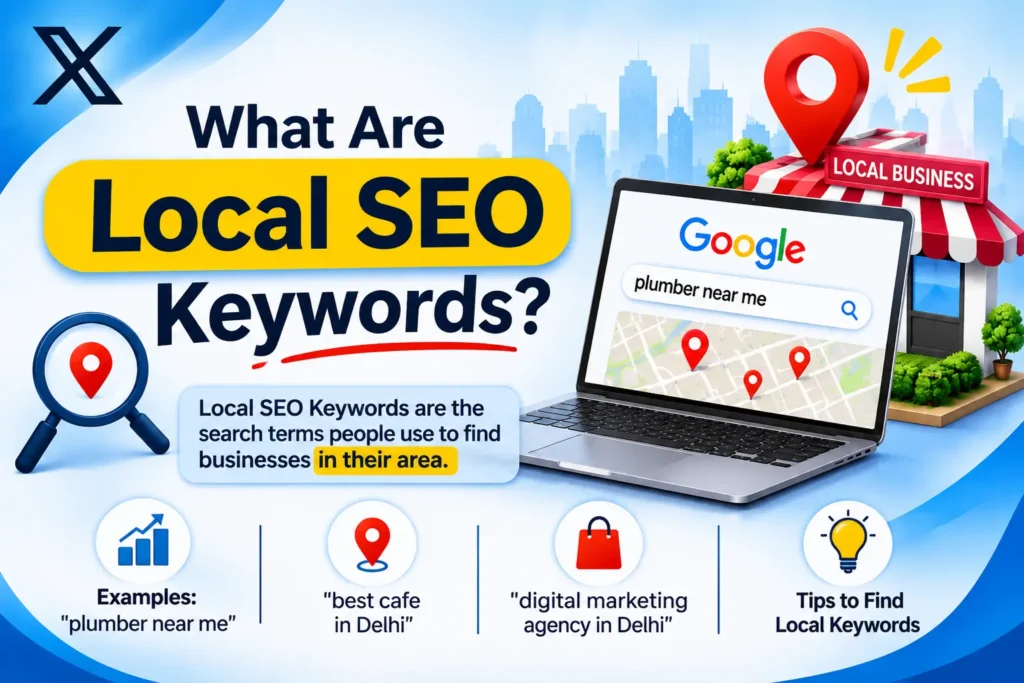
Local SEO keywords are search terms people use to find products, services, or businesses in a particular geographic area.
For example, someone looking for a plumber in Chicago might search for:
- Plumber in Chicago
- Emergency plumber near me
- Affordable plumbing services in Chicago
- Best plumbing company in Chicago
- Water heater repair in Lincoln Park
These keywords indicate that the searcher may be looking for a nearby service provider.
Local SEO keywords generally fall into three categories:
1. Location-based keywords
These include a city, neighborhood, or other geographic term.
Examples:
- Dentist in Austin
- Electrician in Brooklyn
- Digital marketing agency in London
2. Service-based keywords
These describe the service a customer needs.
Examples:
- Emergency plumbing service
- Teeth whitening service
- Website SEO audit
3. Local intent keywords
These indicate that a person wants a nearby business or provider.
Examples:
- Best coffee shop near me
- Roofing companies nearby
- Local SEO consultant near me
Understanding these keyword types helps you create pages that match the needs of local customers.
ExptMarket Services : Click Here
Why Is Keyword Research Important for Local Businesses?

Keyword research helps you understand how potential customers search for your services online.
Here are some important benefits.
1. Attract More Relevant Website Visitors
Targeting relevant keywords helps your website appear for searches related to your products or services. How to Find SEO Keywords for a Local Business Instead of attracting random visitors, you can focus on people who may actually need what your business offers.
2. Reach Customers in Your Service Area
A local business usually serves a particular city, region, or group of neighborhoods. How to Find SEO Keywords for a Local Business Location-specific keywords help you create content that reflects the areas you genuinely serve.
3. Discover New Service Opportunities
Keyword research can reveal services or customer problems you have not addressed on your website.
For example, a cleaning company might discover that potential customers search for move-out cleaning, deep cleaning, or office cleaning separately.
Each service may deserve a dedicated page if it represents a genuine business offering.
4. Improve Your Local SEO Strategy
Relevant keywords can guide your website content, page titles, headings, service descriptions, and internal links.
They can also help you identify useful topics for blog posts and frequently asked questions.
5. Generate More Qualified Leads
A person searching for a specific service in a specific location may be closer to making a purchasing decision than someone searching for general information.
For example, “emergency electrician in Dallas” has a more immediate service intent than “how does electricity work.”
Actual conversions still depend on your competition, website experience, pricing, reputation, and other factors.
Step 1: Identify Your Main Services and Target Locations
Before using a keyword research tool, make a list of the services your business offers and the locations you serve.
This gives your keyword research a clear starting point.
Suppose you own a plumbing business in Dallas.
Your main services might include:
- Emergency plumbing
- Drain cleaning
- Water heater repair
- Pipe leak repair
- Bathroom plumbing installation
Your service locations might include Dallas, Plano, Irving, and nearby neighborhoods where you genuinely operate. How to Find SEO Keywords for a Local Business
You can combine these service and location terms to generate initial keyword ideas.
For example:
| Service | Location | Keyword idea |
| Plumbing | Dallas | Plumber in Dallas |
| Drain cleaning | Dallas | Drain cleaning in Dallas |
| Water heater repair | Plano | Water heater repair in Plano |
| Emergency plumbing | Irving | Emergency plumber in Irving |
| Leak repair | Dallas | Pipe leak repair in Dallas |
These are starting ideas, not verified search-volume or competition estimates.
Important: Only target locations where your business genuinely provides services. Avoid creating dozens of nearly identical city pages that offer no unique value.
Step 2: Brainstorm Keywords From Your Customers’ Questions
Your existing and potential customers can provide valuable keyword ideas.
Think about the questions they ask before hiring a service provider.
For example, customers might ask:
- How much does the service cost?
- How quickly can someone arrive?
- Is the service available in my area?
- What is included in the service?
- How can I choose a reliable provider?
- Can the problem be fixed without replacing the equipment?
These questions can become useful keywords and blog topics.
A roofing company, for example, might explore:
- Roof repair cost in Austin
- Signs you need roof replacement
- How to find a reliable roofing contractor
- Emergency roof repair in Austin
You can also review customer emails, sales enquiries, reviews, competitor FAQs, and discussions in relevant online communities for additional ideas.
The goal is to understand the words customers naturally use rather than relying only on industry terminology.
Step 3: Use Google Autocomplete for Keyword Ideas
Google Autocomplete is a simple starting point for discovering related search phrases.
Follow these steps:
- Open Google.
- Enter your main service followed by a location.
- Observe the suggested searches.
- Repeat with different service and location combinations.
- Record relevant suggestions in a spreadsheet.
For example, enter:
- Dentist in Austin
- Emergency dentist in Austin
- Affordable dentist in Austin
- Dental implants in Austin
You can also try variations such as “cost” “best” “near me” and “open now” when they fit your business.
Autocomplete suggestions can reveal useful search patterns, but they do not provide reliable monthly search volumes or prove that a keyword is easy to rank for.
Step 4: Find Keyword Ideas Using Google Keyword Planner
Google Keyword Planner can help you discover related keywords and review estimated search demand.
You can access it here:
How to use Google Keyword Planner

Step 1: Open Google Keyword Planner.
Step 2: Select “Discover new keywords.”
Step 3: Enter your main services and relevant keyword ideas.
For example:
- Plumber in Dallas
- Emergency plumbing service
- Drain cleaning service
- Water heater repair
Step 4: Set the target location to the city, region, or country relevant to your business.
Step 5: Select the appropriate language.
Step 6: Review the keyword ideas and their average monthly search estimates.
Step 7: Export or record relevant keywords for further analysis.
Google Keyword Planner is primarily designed for advertising research. Its search estimates can be useful for SEO planning, but its advertising competition metric is not the same as organic SEO keyword difficulty. How to Find SEO Keywords for a Local Business
Also, available estimates may vary by location, date range, and account conditions.
Step 5: Check Search Intent Before Choosing a Keyword
How to Find SEO Keywords for a Local Business. Search intent describes what a person wants to accomplish when entering a query into Google.
Understanding intent helps you decide which page should target each keyword.
There are four useful categories to consider.
1. Informational Intent
The person wants to learn something.
Examples:
- How to unclog a kitchen drain
- How does local SEO work?
- How much does roof repair cost?
These searches may be suitable for educational blog posts.
2. Commercial Investigation
The person is comparing providers or evaluating options.
Examples:
- Best plumbers in Dallas
- Top SEO agencies for small businesses
- Compare local cleaning services
These searches may be suitable for comparison guides, case studies, or service pages that help customers make decisions.
3. Transactional Intent
How to Find SEO Keywords for a Local Business
The person is ready to take action.
Examples:
- Book a plumber in Dallas
- Hire an electrician near me
- Schedule a dental cleaning in Austin
These keywords often fit service pages, booking pages, and contact pages.
4. Navigational Intent
The person is looking for a particular business or website. How to Find SEO Keywords for a Local Business
Examples:
- A specific company’s name
- A company’s contact page
- A business’s official website
For each keyword, search Google and inspect the results. If most top-ranking pages are service pages, a service page may be a better fit than a general blog post. How to Find SEO Keywords for a Local Business
Step 6: Analyze Your Local Competitors
Competitor research can help you discover keyword opportunities and understand what Google considers relevant for a particular search. How to Find SEO Keywords for a Local Business
Start by searching for your main services and locations.
For example, a digital marketing agency might investigate searches such as:
- Local SEO services in Chicago
- SEO consultant for small businesses
- Google Business Profile optimization service
Review the websites appearing in the organic search results.
Look for:
- Service pages and their headings
- Location-specific content
- Blog topics
- Frequently asked questions
- Useful resources and case studies
- Gaps in the information provided
You can also use SEO platforms such as Ahrefs or Semrush to discover competitor keywords, depending on their available features and your subscription.
Do not simply copy competing pages. How to Find SEO Keywords for a Local Business Look for questions they have not answered well, examples they have omitted, or practical information that would help your own audience. How to Find SEO Keywords for a Local Business
A smaller website can sometimes compete for specific queries, but competitor size alone does not determine ranking difficulty.
Step 7: Find Long-Tail Local SEO Keywords
Long-tail keywords are specific search phrases that often express a clearer need than broad keywords.
For example:
Broad keyword: Plumber
More specific keyword: Emergency plumber in Dallas
Long-tail keyword: Emergency plumber for a leaking water heater in Dallas
The more specific phrase may have a smaller audience, but it can reflect a very clear customer need.
Here are some long-tail keyword ideas across different local business categories:
| Business type | Keyword idea |
| Plumbing | Emergency plumber for a leaking water heater |
| Dental clinic | Affordable teeth whitening in Austin |
| Cleaning company | Move-out cleaning service in Brooklyn |
| Roofing company | Roof leak repair after heavy rain in Dallas |
| Digital marketing agency | Local SEO services for small businesses |
| Restaurant | Family-friendly Italian restaurant in Austin |
| Auto repair shop | Brake repair shop near downtown Dallas |
These examples are ideas to validate, not confirmed low-competition keywords.
For a new website, specific keywords can be worth investigating because they may have clearer intent and less competition than broad head terms. How to Find SEO Keywords for a Local Business
However, long-tail keywords are not automatically easy to rank for. Always examine the actual search results and available keyword metrics.
Step 8: Evaluate Keyword Difficulty and Search Volume
After collecting keyword ideas, evaluate each one before creating content.
Focus on four factors.
Monthly Search Volume
Search volume estimates how frequently a keyword is searched in a given location and time period. How to Find SEO Keywords for a Local Business
A keyword with low volume may still be valuable if it attracts customers who need a specific service.
Do not reject every keyword simply because it has a small estimated audience.
Keyword Difficulty
SEO tools may provide a keyword difficulty score to estimate how challenging it could be to rank organically.
Different tools use different calculations, so their scores are not directly interchangeable. How to Find SEO Keywords for a Local Business
For a new website, you can begin by investigating keywords with lower difficulty scores, but do not treat a particular score as a guarantee of ranking success.
Search Intent
Ask whether the people searching for the keyword are likely to need the service you offer.
A keyword can attract many visitors but produce few enquiries if its intent is unrelated to your business.
Ranking Competition
Search for the keyword and inspect the current results.
Check whether the top pages answer the query thoroughly, have relevant content, and appear to satisfy the searcher’s needs.
A practical keyword evaluation spreadsheet can look like this: How to Find SEO Keywords for a Local Business
| Keyword | Monthly volume | Difficulty | Intent | Priority |
| Main service + city | Verify | Verify | Transactional | High if relevant |
| Specific service problem + city | Verify | Verify | Transactional | Investigate |
| How to solve a service problem | Verify | Verify | Informational | Medium |
| General industry keyword | Verify | Verify | Mixed | Compare competition |
Fill in the volume and difficulty columns using your chosen tools rather than relying on assumptions.
Step 9: Choose the Right Page for Each Keyword
Not every keyword should become a blog post.
Choosing the correct page type helps you align your content with search intent.
Use a Service Page for High-Intent Keywords
Examples:
- Plumber in Dallas
- Local SEO services
- Emergency electrician in Austin
Your service page should explain what you offer, who you serve, your service area, relevant proof of experience, and how customers can contact you. How to Find SEO Keywords for a Local Business
Use a Blog Post for Informational Keywords
Examples:
- How to prevent clogged drains
- How to find SEO keywords for a local business
- How much does roof repair cost?
Your blog should answer the question clearly and provide practical steps. How to Find SEO Keywords for a Local Business
Use a Location Page When It Adds Genuine Value
If your business serves multiple locations, a dedicated location page may be appropriate when it provides useful, accurate information about the services available in that area.
Avoid generating thin, duplicate pages that simply replace one city name with another. How to Find SEO Keywords for a Local Business
Avoid Keyword Cannibalization
Keyword cannibalization can occur when multiple pages target the same query and compete with one another in search results.
For example, creating several nearly identical blog posts about finding local SEO keywords may make your content strategy less focused. How to Find SEO Keywords for a Local Business
Review your existing pages before creating a new article. How to Find SEO Keywords for a Local Business If a suitable page already exists, improve it instead of publishing another page that serves the same purpose.
Step 10: Optimize Your Website Content With Local Keywords
Once you have selected relevant keywords, use them naturally throughout the page.
Page Title
Write a clear title that describes the service and, where relevant, the location.
Example:
“Emergency Plumbing Services in Dallas | Your Business Name”
Main Heading
Use a heading that clearly identifies the page’s main topic.
Example:
“Emergency Plumbing Services in Dallas”
URL
Keep the URL short and descriptive.
Example:
/emergency-plumbing-dallas/
Meta Description
How to Find SEO Keywords for a Local Business. Write a helpful summary that accurately describes the page and gives users a reason to click.
Example:
“Need emergency plumbing in Dallas? Learn about our plumbing services, service availability, and how to request assistance.”
A meta description can help communicate relevance, but Google may generate a different snippet for a particular search.
Page Content
Explain your service, customer benefits, process, service area, and frequently asked questions. How to Find SEO Keywords for a Local Business
Include relevant keyword variations where they fit naturally. Do not repeat the same phrase unnecessarily.
Internal Links
Link relevant blog posts to related service pages.
For example, a blog post about common plumbing problems can link to your plumbing repair page.
For a digital marketing agency, an article about local keyword research can link to its Local SEO or SEO service page.
Google Business Profile
For eligible local businesses, keep your Google Business Profile accurate and complete.
Make sure your business information, contact details, hours, services, and other relevant details are up to date.
A well-maintained profile supports local visibility, but keyword stuffing your business name or profile description is not an appropriate optimization strategy.
Step 11: Track Keyword Performance in Google Search Console
Publishing content is only the beginning. How to Find SEO Keywords for a Local Business You also need to monitor how your pages perform.
Google Search Console is available at:
Once your website is verified and data becomes available, review the Performance report.
Important metrics include:
- Impressions: How often your website appeared in search results.
- Clicks: How often people clicked through to your website.
- Click-through rate: The proportion of impressions that resulted in clicks.
- Average position: An aggregated indicator of your site’s position in search results.
Review the queries associated with each page to discover which searches are generating visibility.
If a page receives impressions but few clicks, review the title, snippet, search intent, and current search results. How to Find SEO Keywords for a Local Business
If a page receives little visibility, check indexing, content relevance, competition, and whether the keyword has meaningful demand.
A new website may need time to accumulate useful data. Avoid making conclusions from a handful of impressions or changing every page immediately after publication. How to Find SEO Keywords for a Local Business
Common Local SEO Keyword Research Mistakes to Avoid
1. Choosing Keywords Only Because They Have High Search Volume
Broad keywords may attract a large audience but can be difficult to rank for and may not generate qualified leads.
Prioritize relevance and business intent alongside search volume.
2. Ignoring the Searcher’s Location
A business serving one city should not automatically target every major city in a country.
Focus on genuine service areas and the customers you can realistically serve. How to Find SEO Keywords for a Local Business
3. Targeting the Same Keyword on Multiple Pages
Create a clear purpose for every important page and review existing content before publishing something similar.
4. Stuffing Keywords Into Content
Repeatedly inserting exact-match phrases can make content difficult to read.
Write for people first and use relevant variations naturally.
5. Ignoring Conversion Opportunities
An article may attract visitors without generating enquiries if it lacks a relevant next step.
Link to the appropriate service page and make it easy for interested readers to contact your business.
6. Expecting Immediate Rankings
Organic visibility takes time and depends on many factors, including competition, technical accessibility, content quality, relevance, and authority. How to Find SEO Keywords for a Local Business
Publish useful content consistently and use actual performance data to guide improvements.
Frequently Asked Questions
1. How do I find SEO keywords for a local business for free?
Start with Google Autocomplete, Google Search suggestions, customer questions, competitor websites, and Google Keyword Planner. Use Google Search Console to track your website’s actual queries after it starts receiving impressions. How to Find SEO Keywords for a Local Business
2. What are the best keywords for local SEO?
The best keywords are those that match your services, target locations, and customers’ search intent. Examples include service-plus-city phrases, specific service problems, and location-relevant informational queries.
The best choice depends on the business and should be validated using search data.
3. How many keywords should a local business target?
There is no fixed number. How to Find SEO Keywords for a Local Business Begin with a focused set of relevant keywords for your main services and locations. Group closely related queries on the same page when they share search intent, and create separate pages when the services or user needs are meaningfully different. How to Find SEO Keywords for a Local Business
4. Are long-tail keywords better for local businesses?
Long-tail keywords can be useful because they often describe a specific need. They may be worth prioritizing for a new website, but their competition and search demand should still be checked. How to Find SEO Keywords for a Local Business
5. How can I check local keyword search volume?
Use Google Keyword Planner and select the relevant geographic location and language. You can also use SEO platforms such as Ahrefs or Semrush for additional keyword metrics. Remember that estimates vary by tool and location. How to Find SEO Keywords for a Local Business
6. Should I include my city name in every keyword?
No. Include a city or location when it naturally matches the search intent. Some searches have local intent without explicitly mentioning a city, such as “plumber near me.”
7. How long does local SEO take to show results?
There is no guaranteed timeline. A new website may need several months or longer to establish visibility, depending on the competition, content, technical setup, and other factors. Track indexing, impressions, clicks, and enquiries rather than relying on a fixed deadline. How to Find SEO Keywords for a Local Business
Conclusion
Finding SEO keywords for a local business starts with understanding your services, customers, and service area. How to Find SEO Keywords for a Local Business Use customer questions and Google suggestions to generate ideas, validate them with keyword research tools, study competing pages, and match each keyword to the right page type.
Focus on relevant keywords that help real customers solve problems or find services. Optimize your pages naturally, connect your blog content to relevant service pages, and monitor performance in Google Search Console.
Remember, successful local SEO is not about targeting the largest possible number of keywords. It is about helping the right people find your business when they need what you offer.
Need Help Improving Your Website’s Search Visibility?
Finding the right keywords is only one part of an effective SEO strategy. If you want to identify keyword opportunities, improve your website’s content, or build a stronger organic search presence, explore the SEO services offered by ExptMarket.
Visit ExptMarket.com to learn more about how strategic SEO can support your business growth.
Read Our All Blogs
Digital Marketing Services In Pitampura : Click Here
Local SEO for Small Businesses : Read Now
Foundation Sites : Visite Now
Pingback:AI SEO Services: Proven Ways to Win AI Search in 2026