




If you own a small business, appearing when nearby customers search for your products or services can make a significant difference. Whether you run a salon, restaurant, dental clinic, consultancy, repair service, or retail shop, your potential customers are already using Google to discover businesses in their area.
Local SEO for Small Businesses helps your business become more visible in relevant local search results, Google Maps, and location-based searches. Instead of trying to reach everyone on the internet, you can focus on people who are more likely to visit your store, call your business, request a quote, or book an appointment.
This guide explains how local search optimization works, how to improve your Google Business Profile, which local keywords to target, and how to build a practical strategy that supports long-term growth. Local SEO for Small Businesses
What Is Local SEO for Small Businesses?
Local SEO for Small Businesses is the process of improving a business’s online presence so that it can appear in relevant searches associated with a specific location. It involves optimizing your website, Google Business Profile, business information, customer reviews, and local online presence.
For example, someone searching for “dentist near me” or “best salon in Delhi” is looking for a nearby service rather than general information.
Local SEO for Small Businesses Search optimization helps search engines understand what your business offers, where you operate, and which searches are relevant to your services.
Unlike traditional SEO, which may target a nationwide or international audience, local SEO focuses on attracting customers within your service area. Local SEO for Small Businesses
Why Is Local SEO Important for Small Businesses?

Small businesses often have limited marketing budgets and cannot always compete with large brands through expensive advertising campaigns. Local SEO for Small Businesses Local search visibility provides another way to reach potential customers who are actively looking for specific services.
Here are the main benefits:
- More local visibility: Improve your chances of appearing in relevant Google Search and Maps results.
- Qualified website traffic: Attract visitors searching for services you actually provide.
- More calls and enquiries: Make it easier for customers to contact your business.
- Stronger customer trust: Accurate information, genuine reviews, and helpful website content support credibility.
- Long-term marketing value: Useful pages and a well-maintained business profile can continue attracting customers over time.
Results depend on your location, competition, website quality, business category, and other factors. Local SEO is a process rather than an instant ranking solution.
1. Optimize Your Google Business Profile
Your Google Business Profile is one of the most important tools for managing how your business appears on Google Search and Maps.
Start by claiming or creating your profile and completing the verification process. Local SEO for Small Businesses Make sure the information accurately represents your real business.
Follow these steps:
- Choose the correct business category. Select the category that best describes your primary service.
- Add accurate business details. Include your business name, phone number, address where applicable, website, and operating hours.
- Define your service area. If you visit customers instead of serving them at a storefront, configure your service area appropriately.
- Write a useful business description. Explain your services, specializations, and the areas you serve without repeating keywords unnaturally.
- Upload genuine photos. Add relevant images of your premises, team, products, or completed work.
- Keep information updated. Change your hours and business details when necessary.
Avoid adding city names or services to your business name unless they are genuinely part of your real-world business name.
A complete and accurate profile improves the information available to potential customers, but it does not guarantee a particular ranking position.
2. Find the Right Local SEO Keywords
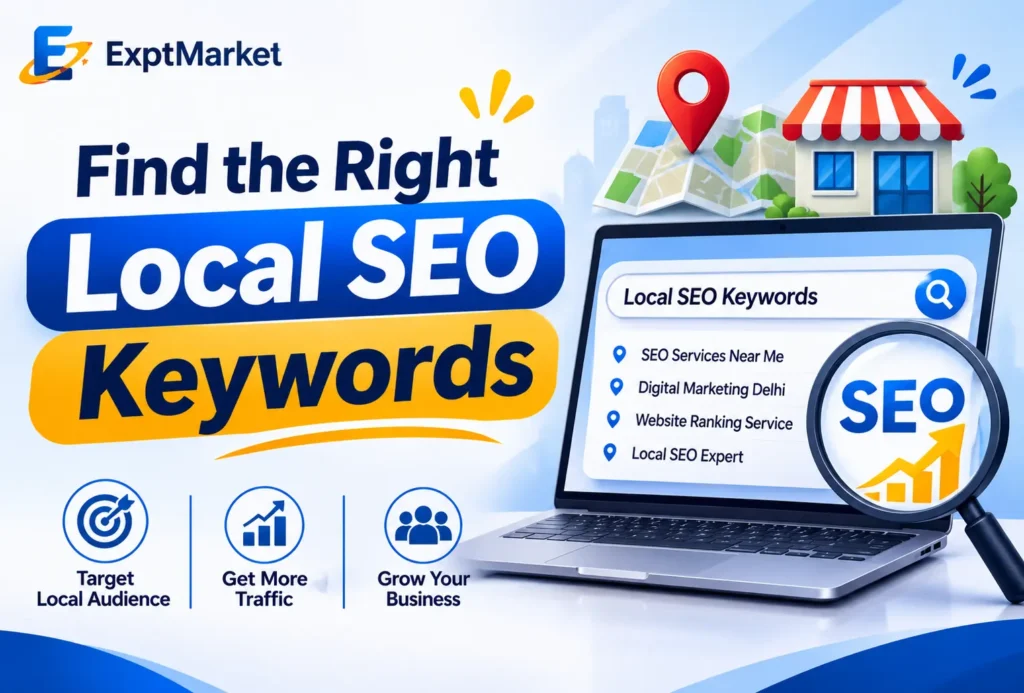
Keyword research helps you understand how customers describe their needs when searching online.
A strong local SEO strategy combines service-related terms, location modifiers, and specific customer problems.
For example, a digital marketing agency could target:
- Digital marketing agency in Delhi
- Local SEO services for small businesses
- SEO company for local businesses
- Google Maps optimization services
- SEO services for restaurants in Delhi
- Local SEO consultant for small businesses
Do not select keywords only because they sound popular. Consider search intent, competition, relevance, and whether the query could bring the right audience to your website. Local SEO for Small Businesses
You can use Google Keyword Planner, Google Search Console, and autocomplete suggestions to discover keyword ideas. Review actual search results to understand what users expect to find.
Create dedicated pages for genuinely different services or locations where you can provide unique, useful information. Avoid publishing multiple nearly identical pages simply by changing city names.
3. Optimize Your Website for Local Search

Your website should clearly communicate your services, service areas, and business value to both visitors and search engines.
Use your primary location and service naturally in important page elements, including the title tag, main heading, introduction, and relevant page content.
For example, a plumber serving Delhi might use a page title such as “Plumbing Services in Delhi | Business Name.”
Essential website optimization steps include:
- Create clear service pages describing what you offer.
- Add a contact page with accurate business details.
- Make your phone number easy to find on mobile devices.
- Use descriptive URLs and meaningful internal links.
- Compress images and improve page loading performance.
- Ensure the website works well on smartphones.
- Add relevant image alt text that describes each image accurately.
For Local SEO for Small Businesses, relevance matters more than inserting the same keyword into every paragraph. Use natural variations such as local search optimization, nearby service searches, and local business visibility when they fit the topic.
Your content should answer real customer questions, explain your process, and make the next step obvious.
4. Build Consistent Business Citations
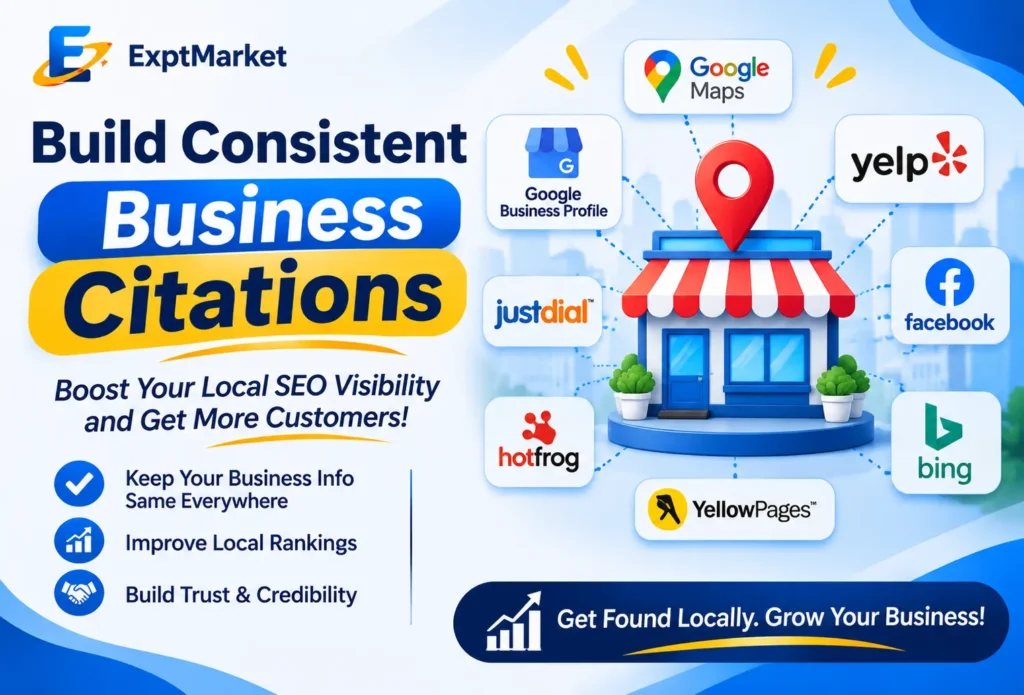
Local SEO for Small Businesses. A business citation is an online mention of your business information, commonly including its name, address, and phone number.
Citations may appear in business directories, industry websites, local associations, and other relevant platforms.
To improve your business information consistency: Local SEO for Small Businesses
- Check your existing directory listings.
- Correct outdated addresses and phone numbers.
- Use consistent business details across important platforms.
- Prioritize reputable directories and relevant industry websites.
- Remove or correct duplicate listings where possible.
Quality and relevance are more important than submitting your details to hundreds of low-quality directories.
Citations help customers find accurate business information and can support your broader local presence. They should be combined with a useful website, a complete business profile, and genuine customer feedback.
5. Earn Genuine Customer Reviews
Online reviews influence how people evaluate Local SEO for Small Businesses. They can help potential customers understand service quality, communication, reliability, and customer experience.
Create a simple process for asking satisfied customers to leave honest feedback. You can share your Google review link after completing a service or include it in a follow-up message.
To manage reviews effectively:
- Ask customers for honest reviews without offering rewards.
- Respond professionally to positive and negative feedback.
- Address genuine complaints and explain how you resolve issues.
- Never purchase fake reviews or post reviews on behalf of customers.
- Avoid pressuring customers to leave only positive reviews.
When responding, mention relevant details naturally without revealing private customer information.
Reviews should reflect real experiences. A consistent focus on customer service is more sustainable than trying to increase review counts through shortcuts. Local SEO for Small Businesses
6. Create Helpful Local Content
Local content allows your business to answer questions that potential customers have before choosing a provider.
For example, an accountant could publish a guide to preparing documents for a tax consultation. Local SEO for Small Businesses A salon could explain how to choose a suitable treatment. A home service company could publish a maintenance checklist for local homeowners.
Useful content ideas include:
- Service guides for customers in your area
- Answers to frequently asked questions
- Local pricing factors and cost explanations
- Comparisons of service options
- Seasonal maintenance advice
- Case studies based on real customer projects, with permission
The goal of Local SEO for Small Businesses is not simply to publish more articles. Local SEO for Small Businesses It is to create pages that solve specific problems and demonstrate genuine knowledge.
Avoid inventing customer results, publishing unsupported statistics, or creating location pages with almost identical content. Add original examples, photographs, expert insights, and practical advice wherever possible.
7. Improve Local Links and Community Visibility
Links from relevant, trustworthy websites can help people discover your business and provide useful context about your local presence.
Consider opportunities such as:
- Joining a legitimate local business association
- Sponsoring a relevant community event
- Collaborating with complementary local businesses
- Contributing useful expert advice to local publications
- Publishing original research or a helpful local resource
For example, an interior designer might collaborate with a local home improvement business on a practical renovation guide.
Focus on relationships and useful contributions rather than buying links or exchanging links at scale. Local relevance and editorial quality matter more than collecting large numbers of backlinks. Local SEO for Small Businesses
8. Use Structured Data and Track Your Results
Structured data is a standardized format that helps search engines interpret information on a webpage. Eligible local businesses can use relevant LocalBusiness structured data to describe details such as their business name, address, opening hours, and contact information.
Only include accurate information that matches your real business details. Validate your implementation with Google’s Rich Results Test and monitor indexing through Search Console.
Structured data helps search engines understand your page, but it does not guarantee enhanced search results or higher rankings.
You should also measure performance regularly. Useful metrics include:
- Organic impressions and clicks in Google Search Console
- Search queries bringing visitors to your website
- Relevant calls, bookings, and enquiry submissions
- Google Business Profile interactions, where available
- Conversions generated by local landing pages
Use these measurements to identify which pages attract relevant visitors and which require improvement.
How to Create a Local SEO Strategy for Small Businesses in 30 Days

You do not need to complete every task at once. A simple schedule helps you prioritize the most important improvements. Local SEO for Small Businesses
Week 1: Audit your presence. Check your Google Business Profile, website, business information, contact details, and existing rankings.
Week 2: Improve your website. Update title tags, headings, service pages, internal links, mobile usability, and local keyword targeting.
Week 3: Build trust. Correct important citations, create a review request process, add genuine business photos, and improve customer-facing information.
Week 4: Publish and measure. Publish one or two genuinely useful local articles, track search performance, and review enquiries and conversions.
After the first month, continue improving pages based on customer questions and actual performance data. Meaningful progress may take several weeks or months, depending on your starting point and local competition.
Frequently Asked Questions
How long does local SEO take to show results?
There is no fixed timeline. Some improvements can help customers find accurate business information quickly, while meaningful ranking and traffic changes may take weeks or months. Results depend on competition, relevance, website quality, and the work completed.
Is Google Business Profile enough for local SEO?
No. A well-maintained profile is important, but your website, accurate business information, customer reviews, relevant content, and overall local presence also matter.
Can a business rank on Google Maps without a physical shop?
Eligible service-area businesses can have a Google Business Profile without displaying a customer-facing address. Eligibility and profile setup must follow Google’s guidelines. Virtual offices and ineligible locations should not be used to create misleading listings.
What is the difference between local SEO and traditional SEO?
Traditional SEO can target searches across broad geographic areas, while local SEO focuses on relevant searches connected to a location or service area. Both involve useful content, website quality, and helping search engines understand a business.
Is local SEO worth it for small businesses?
It can be valuable when customers search online for the services you provide. Local SEO for Small Businesses The best way to evaluate its value is to track relevant enquiries, bookings, qualified leads, and customer acquisition costs rather than rankings alone.
Final Thoughts

Local SEO for Small Businesses is about making it easier for nearby customers to discover, evaluate, and contact your business. Start with accurate business information, a well-optimized Google Business Profile, relevant service pages, genuine reviews, and helpful local content.
Keep improving your website based on customer needs and real performance data. Avoid shortcuts, misleading listings, and keyword stuffing.
If you need help identifying local SEO opportunities, improving your website, or developing a location-focused content strategy, ExptMarket can help you explore the next steps for improving your online visibility and attracting more relevant enquiries.
Shop ExptMarket : Click Here
Foundation : Donate Here